Repository navigation
Make webviews load locally - #16
Conversation


Instead of using Microsoft's hosted endpoint.  This also fixes issues
when using code-server over http since some browsers refuse to load http
content (like when using localhost) in https contexts (since the iframe
was always https).

| webEndpointUrlTemplate: this.createRequestUrl(req, parsedUrl, '/static').toString(), | ||
| webviewContentExternalBaseUrlTemplate: './webview/{{uuid}}/', | ||
|
|
||
| updateUrl: this.createRequestUrl(req, parsedUrl, '/update/check').toString(), |
There was a problem hiding this comment.
@jsjoeio For the proxy fixes it is probably sufficient to make these relative. The webview endpoints can probably just use ./ but the update and logout might be either ./ or ./../ depending on whether VS Code is being accessed from / or /vscode. We could copy the function here: https://github.com/cdr/code-server/blob/cd26f84bc6e0e6f5c17d847d9fdd718980b657a8/src/node/http.ts#L109-L121
There was a problem hiding this comment.
Nice find! Looks like that would be an easy fix to copy in
We cannot use `includes` because this causes problems with endpoints
that may share portions of their paths.

For example /webview/uuid/service-worker.js was colliding with the
/service-worker.js but moving it before caused static assets that load
from a directory called /webview to start failing.  We could move static
up as well but this may just cause other conflicts.

The standard ways of handling base paths seem to be to either ask the
user for the base path or require that a rewriting proxy be put in front
of the application (which rewrites /base/path/my/path to /my/path before
it ever gets to the application).  code-server currently requires the
latter and does not support the former but either way the code will look
similar (in the former case we would just strip the base path first,
maybe before calling `handle`).

For reference, the proxy in the Coder product is a rewriting proxy.

This also fixes issues when the web server is behind multiple Express
endpoints.  With the existing code /anything/works/ rather than just the
endpoints you specify (/vscode and / in our case) which is unexpected.
It also makes it possible to browse without a trailing slash, for
example /vscode, although that is currently broken for other reasons.

 jsjoeio
left a comment
jsjoeio
left a comment
There was a problem hiding this comment.
Nice work! 👏 Thanks for seeing this through.
| // The webview endpoint contains variables in the format {{var}} so decode | ||
| // them as `new URI` will encode them. |
| webviewContentExternalBaseUrlTemplate: decodeURIComponent( | ||
| new URL( | ||
| config.productConfiguration?.webviewContentExternalBaseUrlTemplate ?? "", | ||
| window.location.toString(), // This works without toString() but TypeScript thinks otherwise. | ||
| ).toString(), | ||
| ), |
There was a problem hiding this comment.
❓ so here, we are decoding a new URL after constructing it with the webviewContentExternalBaseUrlTemplate and the current window.location as the base. I think
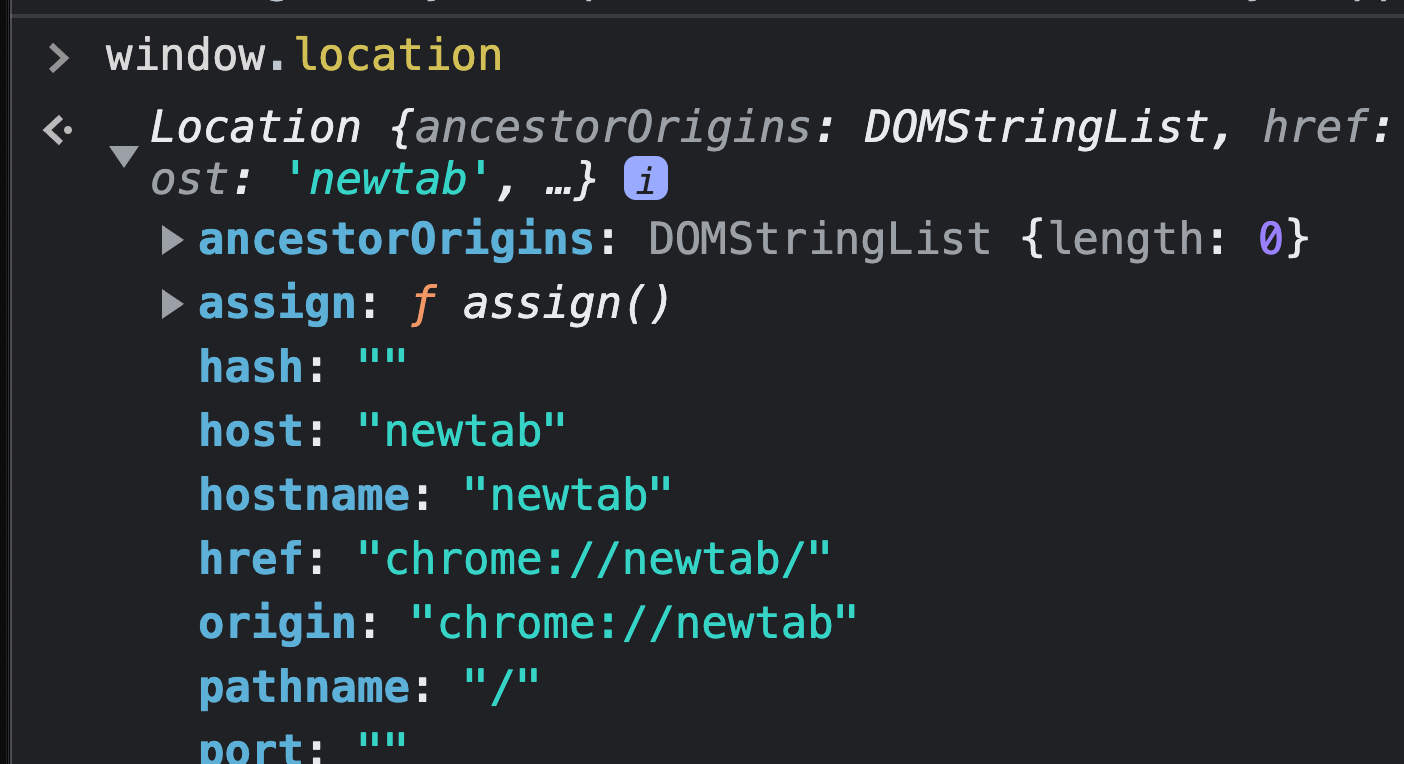
window.location.toString(), // This works without toString() but TypeScript thinks otherwise.
I believe window.location returns an object in some browsers but calling toString() returns the current URL, which is what we want. My guess is TS is actually correct

There was a problem hiding this comment.
This works in the browsers I tested:
new URL("some/path", window.location)
So TypeScript appears to be wrong about it needing to be a string. MDN tells us that any value you pass will be stringified automatically. In particular URL (and Location, it seems) will use the href property (toString() just returns href in these cases I believe).
There was a problem hiding this comment.
Note: The url and base arguments will each be stringified from whatever value you pass, just like with other Web APIs that accept USVString. In particular, you can use an existing URL object for either argument, and it will stringify to the object's href property.
I see what you're referring to now - TIL!
It's interesting though, according to the typedefs for new URL() it will only accept 'string | URL | undefined.

I wonder then if I should make an issue upstream to update the typedefs here to accept Location. What do you think?
There was a problem hiding this comment.
I should also note that TypeScript does allow URL for the base but not Location for some reason. 🤷
There was a problem hiding this comment.
I should also note that TypeScript does allow URL for the base
Right! I see that in the typedefs. Weird, it doesn't allow Location. I think I'll open up an issue and see if that's a bug.
There was a problem hiding this comment.
Actually, looks like someone already did!
|
|
||
| if (['favicon.ico', 'code-192.png', 'code-512.png'].includes(parsedPath.base)) { | ||
| if (pathname === '/favicon.ico' || pathname === '/manifest.json' || pathname === '/code-192.png' || pathname === '/code-512.png') { | ||
| // always serve icons/manifest, even without a token |
There was a problem hiding this comment.
I guess serving icons without a token means they will always load 👍
There was a problem hiding this comment.
Yup, assets like these cannot use tokens otherwise they would not work on the login page.
| if (pathname === '/favicon.ico' || pathname === '/manifest.json' || pathname === '/code-192.png' || pathname === '/code-512.png') { | ||
| // always serve icons/manifest, even without a token | ||
| return serveFile(this._logService, req, res, join(APP_ROOT, 'resources', 'server', parsedPath.base)); | ||
| return serveFile(this._logService, req, res, join(APP_ROOT, 'resources', 'server', pathname.substr(1))); |
There was a problem hiding this comment.
❓ why do we do pathname.substr(1) here?
There was a problem hiding this comment.
This is from upstream. It appears to be removing the leading slash but I am not sure why. Maybe their version of join breaks when there are leading slashes?
| /** | ||
| * Add an endpoint for self-hosting webviews. This must be unique per | ||
| * webview as the code relies on unique service workers. In our case we | ||
| * use /webview/{{uuid}}. | ||
| * | ||
| * @author coder | ||
| */ |
There was a problem hiding this comment.
Will this PR resolve coder/code-server#4483 then?
| * @author coder | ||
| */ | ||
| if (/^\/webview\//.test(pathname)) { | ||
| // always serve webview requests, even without a token |
There was a problem hiding this comment.
❓ why do we always serve webview requests? wouldn't we want to only serve with the token?
There was a problem hiding this comment.
Good question, I think you might be right. I mostly have it this way since VS Code's appears to behave this way but adding the token is probably smart.
Currently we skip the token anyway but I will make a note on the issue we have for it to block webviews once we support it.
There was a problem hiding this comment.
I should note that it is just serving assets so it should not be a security risk but at the same time it is only needed once you log in so might as well lock it up.
There was a problem hiding this comment.
Well...one more thing haha. You can actually access these files from the /static endpoint already so I guess locking it up would not achieve anything since the static endpoint does not require auth.
| const relativeFilePath = normalize(normalizedPathname.split('/').splice(3).join('/')); | ||
|
|
||
| const filePath = join(APP_ROOT, 'out/vs/workbench/contrib/webview/browser/pre', relativeFilePath); | ||
| if (!isEqualOrParent(filePath, APP_ROOT, !isLinux)) { |
There was a problem hiding this comment.
❓ do you know why we pass the !isLinux as the third argument here?
There was a problem hiding this comment.
The function signature looks like this:
function isEqualOrParent(base: string, parentCandidate: string, ignoreCase?: boolean, separator = sep): booleanLinux is case sensitive so it looks like this is saying to be case sensitive on Linux platforms.
There was a problem hiding this comment.
Edit: corrected, Linux is case sensitive, not insensitive. 🤦
| * A unique path is required for every webview service worker. | ||
| */ | ||
| private async _handleWebview(req: http.IncomingMessage, res: http.ServerResponse, parsedUrl: url.UrlWithParsedQuery): Promise<void> { | ||
| const headers: Record<string, string> = Object.create(null); |
There was a problem hiding this comment.
! I find the type here Record<string, string> interesting but I guess that's cause TS can't infer the correct type because we initialize as an empty object?
There was a problem hiding this comment.
Yeah I am not completely sure (this is copied from upstream) but without some kind of cast this would just be an empty object so you might run into trouble adding headers afterward, for example with:
headers["my-header"] = "my-value";I am not sure but TypeScript might say something like "my-header is not a property of object".
I do not know why they use Record<string, string> over { [key: string]: string } though. 🤔
There was a problem hiding this comment.
Ah gotcha. That makes sense.
I do not know why they use Record<string, string> over { [key: string]: string } though. 🤔
Yeah, wish I knew where to find out why they do that 🤔
| private async _handleWebview(req: http.IncomingMessage, res: http.ServerResponse, parsedUrl: url.UrlWithParsedQuery): Promise<void> { | ||
| const headers: Record<string, string> = Object.create(null); | ||
|
|
||
| // support paths that are uri-encoded (e.g. spaces => %20) |
| `script-src 'self' 'unsafe-eval' ${this._getScriptCspHashes(data).join(' ')} 'sha256-cb2sg39EJV8ABaSNFfWu/ou8o1xVXYK7jp90oZ9vpcg=';`, | ||
| 'child-src \'self\';', | ||
| `frame-src 'self' https://*.vscode-webview.net ${this._productService.webEndpointUrl || ''} data:;`, | ||
| `frame-src 'self' ${this._productService.webEndpointUrl || ''} data:;`, |
There was a problem hiding this comment.
was this the missing puzzle piece? (I guess one of the bigger ones)
There was a problem hiding this comment.
Nope, this is technically unnecessary but it does restrict the CSP scope which to me feels more secure.
There was a problem hiding this comment.
The really important part was setting webviewContentExternalBaseUrlTemplate so it uses the same domain you are using to access code-server and creating an endpoint for it (/webview/uuid) in order to get unique service workers per webview.
There was a problem hiding this comment.
Ah gotcha!
unique service workers per webview
Sounds like this was the main key to fix this!

|
@code-asher anything preventing us from merging this? |


I also had to revert path changes (from using
includes) which also fixed a couple other bugs as well (see commits).